701970
Blue Horizon · Bacon Fat
Grease One For Me
The Mike Vernon sessions in London: George Smith's band with Reed's guitar in the engine room, and the name he gave it on the cover.
Ivan Elmo “Buddy” Reed co-founded Bacon Fat, toured behind Big Mama Thornton and played guitar in Little Richard's band. He shared stages with Muddy Waters, Willie Dixon and Bo Diddley. He has been a professional musician since he was fourteen. Ask a general audience who he is.
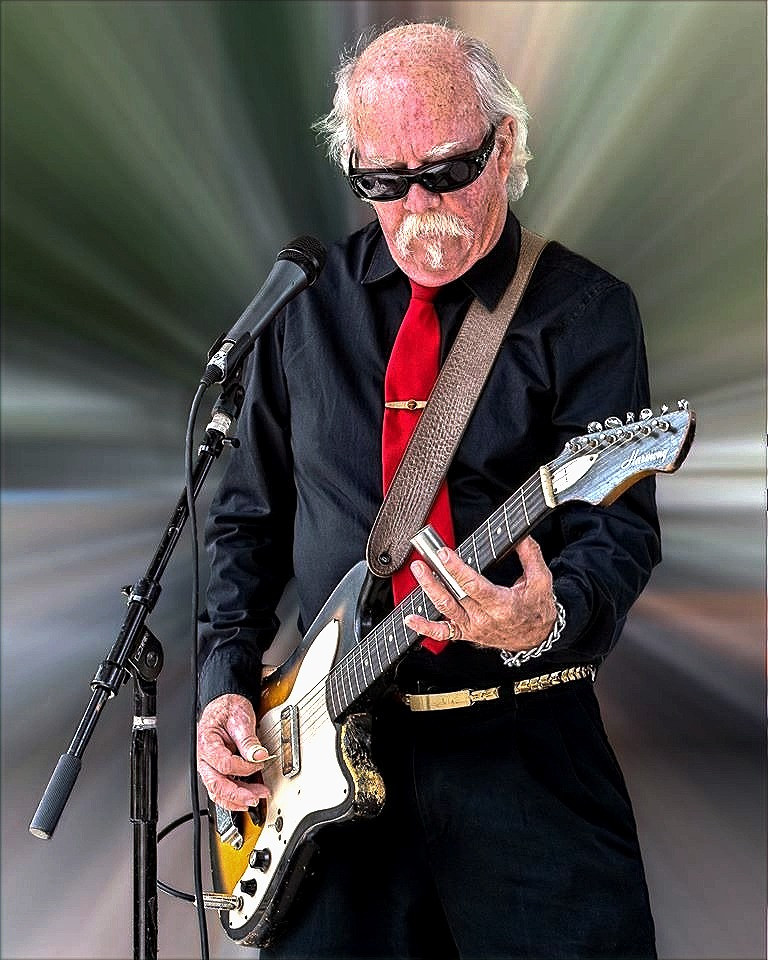
On Buddy Reed's own website there is a snapshot of him standing beside Muddy Waters, and another beside Willie Dixon, and another of him on stage with Bo Diddley. They are not souvenirs of a fan who got lucky with a backstage pass. They are the ordinary paperwork of a working life: for sixty years Reed has been in the room with the people who built this music, usually on the same bill, frequently in the same band, and almost never in the same paragraph of the history books.
That is the thing about the old guard. We tend to speak of them in the past tense while they are still loading the van. Reed is not a reissue, not a rediscovery, not a name a young guitarist reads on a compilation sleeve. He is a man who was there, who is still here, and who has spent six decades doing the one thing the archive exists to document — keeping the blues alive in rooms small enough that the audience can see his hands.
Reed grew up in Rialto, in San Bernardino County, California — not the Delta, not Chicago, not the Mississippi of the legend, but the inland edge of the West Coast circuit where a great deal of postwar blues actually lived. He picked up the guitar at twelve and was playing professionally at fourteen, by his own account, working the blues and old-style rock and roll around San Bernardino in the mid-1960s. As a teenager he competed in the Battle of the Bands at the National Guard armouries near his home town, which is exactly as unglamorous and exactly as instructive as it sounds: a kid learning to hold a room before he learned to hold a record deal.
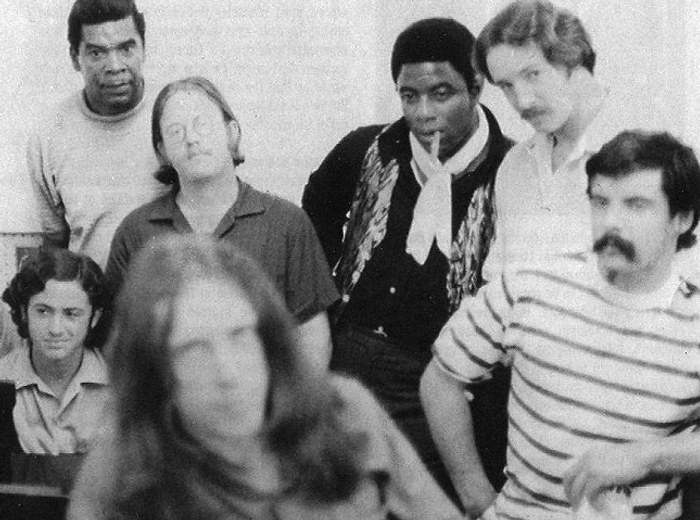
In 1968 he met George “Harmonica” Smith, a Little Walter protégé from Cairo, Illinois, who had already played with Muddy Waters and most of the Chicago diaspora. Reed went with him. The band that formed around Smith — Reed and Rod Piazza on harp and guitar, Richard Innes on drums, Jerry Smith on bass, J. D. Nicholson on piano, and occasionally a fourteen-year-old guitarist called Greg “Little Guitar” Schaefer — became the house band at a club on the corner of 53rd and Avalon in Watts. Everybody called it Small's. They worked it Friday, Saturday and Sunday.
What happened at Small's is the part of a blues education that no conservatory reproduces. Lightnin' Hopkins, Jimmy Reed, Howlin' Wolf, T-Bone Walker, Muddy Waters and Johnny Otis came through, and the house band backed them. Reed was in his early twenties, playing behind men whose records he had worn out, learning arrangements at soundcheck and tempo from a nod. Very few guitarists alive have that as a CV entry. Fewer still are asked about it.
When Smith's group went into the studio and needed a name, it was Reed who supplied one: Bacon Fat, borrowed from an old Andre Williams single his sister owned. The name stuck, and so did the band. With the British producer Mike Vernon — the man behind Fleetwood Mac's early records — they cut for Blue Horizon, recording in London and Los Angeles: Grease One For Me in 1970, No Time For Jive in 1971, with Arkansas Trap following under Smith's own name. Reed's guitar is on all of it, and his voice takes the lead on some of it for the first time.
Those records arrived at the height of the global blues revival, when British and American audiences were suddenly buying the music their own industry had spent thirty years segregating. Bacon Fat toured the United States with Big Mama Thornton — the original voice of “Hound Dog” — and toured and recorded in England. For a young guitarist out of Rialto, that was not a footnote. That was the whole map.
The band's catalogue is usually counted as three Blue Horizon albums; some biographies say five. The discography on Reed's own site lists the 1970–71 sessions and the later Smith titles separately. Either way, the records exist, they are in print in one form or another, and they are the reason his name appears in Blue Horizon's history at all.
The blues did not hand him a career. It handed him a circuit, a van, and a night's work at a time — and he took it for sixty years. The Lost Blues Archive
Then he left. Not out of the business — out of the band, to join the man he has always called his rock and roll idol. Little Richard was assembling a touring group, the gig was offered, and Reed took it, playing Las Vegas and travelling nationally. Accounts differ on how long it lasted: one interview says six months, his official biography says a year. Both agree on what it was — a white guitarist from the West Coast standing inside the most explosive band book in American music, learning showmanship from the man who invented most of it.
That apprenticeship shows. Reed's own band, when he formed it, was not a purist's trio. It played Chuck Berry, Little Richard and the Coasters alongside originals about hard luck and hard living, and it treated rock and roll and the blues as one continuous argument rather than two lineages. That is not a compromise. That is what the music sounded like in the rooms where it was made.
Back in California he reunited with Jerry Smith and Richard Innes and started working under his own name — Buddy Reed & th' Rip It Ups, a trio that could become a quartet when the gig paid for it. For the next quarter of a century they played the saloons, roadhouses and clubs of the Southwest and the Western states: Temecula, Petaluma, Phoenix, San Francisco, the Hotel Utah, the Rhythm Room. Not venues that make careers. Venues that make musicians.
The records came anyway. Tough Enough in 1985, Live at Smalls Paradise the following year, Livin' It in 2001, Blues Sez It All, and in 2011 Teardrops Are Falling — his recordings with the late George Smith — which the Blues Foundation nominated for Historical Album of the Year. In 2025 came the Soul House EP; in 2026, at sixty years in, a new single, “Old Time Used to Be.” Artists do not usually release their best late work. Reed did.
The sound is specific and it is his: a raw, pushing vocal, staccato rhythm guitar that works like a drum kit with strings, and a slide showcase in the Muddy Waters–Elmore James–J. B. Hutto line. He plays standing in front of a band he has led for decades, at a volume that suggests he still has something to prove to somebody. He does: to the record books.
It is worth writing the list out plainly, because lists are what the canon is made of and Reed's is longer than most of the names already in it. He backed or shared a stage with Lightnin' Hopkins, Muddy Waters, Howlin' Wolf, John Lee Hooker, T-Bone Walker, Jimmy Reed, Bo Diddley, Willie Dixon, Pee Wee Crayton, J. B. Hutto, Johnny Otis and James Cotton. He toured with Big Mama Thornton and played in Little Richard's band. He has recorded with Jimmy Rogers, Louisiana Red, George “Harmonica” Smith, Mark Hummel, James Harman and Bob Corritore.
In almost every case he was not a guest. He was the guitarist in the band, the one holding the rhythm down while a legend did what legends do — which is why his name is on so few front covers and in so many session logs. Charlie Musselwhite, James Harman and Mark Hummel have all gone on record saying, in their own words, that Reed plays the real thing. They would know. They were there too.
He is not a revival act. He is the thing the revival was trying to get back to.
The Lost Blues ArchiveSome of the recognition has arrived. In 1998 Reed was inducted into the Arizona Blues Hall of Fame. He has been formally recognised by the City of Los Angeles and the California State Senate as a creator of the West Coast blues sound — a sound that usually gets credited to studios and producers rather than to the guitarists who defined its attack. In 2012 the Blues Foundation nominated his George Smith recordings for a historical album award.
That is a real record. It is also, for a man with sixty years on the clock and this list of credits, a fraction of what the same CV would have produced in almost any other genre. The reasons are the ones this archive keeps finding: a regional circuit instead of a national hit; a sideman's biography instead of a frontman's myth; a working bluesman treated as heritage rather than as news; and an industry that will reissue a 1971 record in a deluxe gatefold before it will put the man who played on it in a headline slot.
There is also a clock. This is the last working generation that learned the blues by standing behind the people who recorded it. When Reed plays "Blues For Mud" — a song he wrote about his early days with Muddy Waters — the anecdote is not research. It is memory. Every year that passes takes more of that away, and no reissue programme has yet been invented that can replace a witness with a witness.
So the argument is not sentimental, and it is not about charity. It is about accuracy. A history of the blues that mentions Bacon Fat and Big Mama Thornton's touring band and leaves out the guitarist who named the first and played in the second is not a shorter history. It is a wrong one. Put Buddy Reed in the record books — the festivals, the hall of fame ballots beyond Arizona, the career-spanning reissue, the headline set — while he is still standing at the front of the stage, still working, still keeping it alive. He has done sixty years of the hard part. The recognition is the easy part, and it is overdue.
Sources for this page: Buddy Reed's own site and biography at buddyreedblues.com; the Blue Horizon discography of George “Harmonica” Smith and Bacon Fat; interviews with Reed in Inland Empire Magazine, the Northcoast Journal and the blues.gr Q&A; festival and venue biographies from the Humboldt Folklife Society and the Lost Coast Outpost; the notes accompanying the 2025 Tough Enough reissue; and Arizona Blues Hall of Fame records. Where the accounts disagree, this page says so rather than picking the tidier version: the length of the Little Richard engagement is given as six months in one interview and a year in the official biography, and the Bacon Fat album count is given as three and as five in different biographies. Some distributor copy describes Reed as a veteran of Canned Heat; his own account of those years, and every discography consulted for this page, describes George Smith's band and Bacon Fat instead, so the claim is not repeated here. No photographs from the subject's site are reproduced on this page.
Not a complete discography — the collaborations alone would fill a page. These are the records that make the case in a listening session.
The Mike Vernon sessions in London: George Smith's band with Reed's guitar in the engine room, and the name he gave it on the cover.
The second Blue Horizon record, and the one that shows what the band sounded like when it had been on the road with Big Mama Thornton.
His own band, his own name out front. Raw vocal, staccato rhythm, slide — the sound he had been building in roadhouses for a decade.
A recording that goes back to the room where he learned the trade — 53rd and Avalon, the club that made the band.
The Smith sessions, collected decades later. Nominated for Historical Album of the Year by the Blues Foundation in 2012.
Sixty years in and still cutting. The new single is the shortest possible answer to anyone who thinks this music is a museum piece.
Sixty years, one band name at a time, in rooms you could walk into. If this archive is good for anything, it should send you to a gig — and to the ballot.